Sekulow
Ministries > SEKULOW with Jay Sekulow
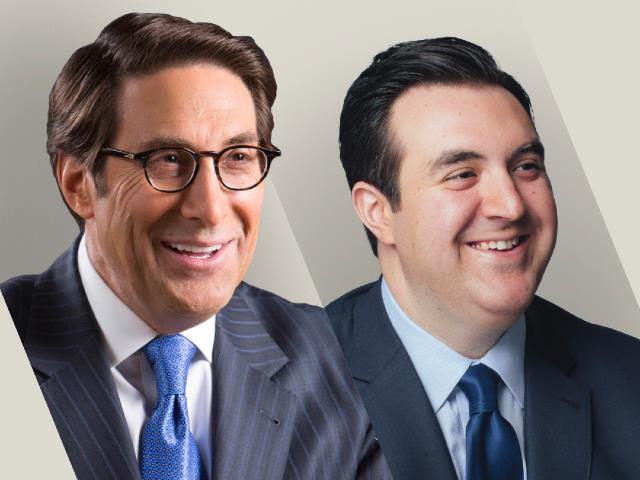
Logan Sekulow and Will Haynes break down Iran's currency crashing ahead of 'Economic D-Day.'
Logan Sekulow: Welcome to Sekulow. It's Monday, August 24th. Will Haynes is in studio. We've got some breaking news coming up. CC Heil is going to be joining us with an update on Pastor Shao, but this has to do with the ongoing war in Iran. You may have thought many times that we were headed towards some sort of resolution, some sort of deal. President Trump threatened what he is calling the economic D-Day. Today, there will be more announcements on that, but even in anticipation of that, we have seen a massive crash in the economy. Now, a lot of you may be going, I thought probably the economy was crashed in Iran already. So, we're going to break that down a little bit, what it means and also how things are going there to begin with because in your head again, you may be picturing things much differently than where they are. At the same time, they put out a new AI-generated video threatening again and putting a bounty this time on Barron Trump, obviously the youngest son of President Trump, who is in college now. This is an adult person now. We're not talking about a small kid at this point, but you have to remember this is what's happening here. We saw that last time that they were in tease towards it, and now months later, one of these really horrific threatening videos has come out now again, targeting one of President Trump's children. So, if tensions in Iran were not high to begin with, let's see where they are now. Phone lines are open for you at 1-800-684-3110. I do think we need to take a little bit of a step back and talk about these economic sanctions, what this could look like, but really where things are in Iran to where they could have this sort of downfall economically.
Will Haynes: That's right. So, we're expecting the Secretary of the Treasury, Scott Bessent, to speak at 1:00 PM Eastern Time announcing a new round of sanctions. He wrote an opinion piece, an op-ed in the Financial Times calling it an economic D-Day for Iran. We don't know the specifics of it, but we know that it will be aimed at the countries that have remaining ties, business ties with the Islamic Republic of Iran. It says that it will be even third parties that maybe are an intermediary in some of these transactions could also get swept up into this. Because of that, we're seeing Iran's currency hit a record low in anticipation of this announcement by the Secretary of the Treasury, where it has dropped to 2.02 million Iranian Rial to $1 US dollar. They have a central bank rate that no one pays, but they pay the market rate that has it pegged at 1.5 million Rial to the dollar. But it has gone market rate down to 2.02 million Rial to $1. There's a lot of inflation that the people of Iran are dealing with as well as a result of this economic collapse.
Logan Sekulow: Ahead of this announcement, President Trump actually just posted on Truth Social, "Iran is completely collapsing," of course, talking economically at this point. But already, look, there are ramifications with other countries like the UAE announced that it was going to suspend trade. Understand, those are big deals when Iran, a big country, and UAE essentially ends up siding with the United States in many ways, saying, "Hey, we've decided we are no longer going to be a trade partner or sourcing anything or importing anything." That is taking a huge hit to this region. So, maybe this is a new way to begin an end of this war. Although it feels like when these threats start rising, again against now directly calling for bounties against the family of the President of the United States, it's very scary. It doesn't feel like that sends you to the end of something. It feels like you are just fanning the flames. We'll continue this conversation when we get back. What do you think? 1-800-684-3110. Also, we're kicking off something special this week here. It's back-to-school week. That's right. For a lot of kids across the country, some of you have been in school already, but a lot of them are headed back this week and next week. We are going to tell you all about the ACLJ's work to protect your student's rights and, of course, your parental rights when your kids enter those hallways. Let's chat about it when we get back and more. Maybe you've got a question about that, by the way. If you have a child or grandchild, 1-800-684-3110. We'll be right back in just a moment. Of course, support the work of the ACLJ. Your gift is doubled during back-to-school week. Do it today at ACLJ.org. Welcome back to Sekulow. I want to hear from you. Phone lines are open at 1-800-684-3110. The United States threatened an economic D-Day on Iran and with just that threat alone, it seems like that has come to fruition. So, when there have been a lot of threats that have come from the Trump administration that you feel like have been empty threats, this one is a threat that has direct consequences. Those consequences have reflected very clearly in the GDP of their entire collapsing economy. Really, when you look at it, it's pretty horrible to see where it stands right now. Again, a lot of this is because the United States is going to put in, what we believe and we're going to know in a few hours, some sanctions on countries dealing with Iran that still have relationships, second or third-party dealing with Iran. So much so that they got ahead of it. The UAE got ahead of it and said, "You know what? We're just going to go ahead and pull our work, our import, our export with Iran." That of course starts things spiraling. Of course, we've done similar situations in Russia. We have those relationships in Cuba where we do not do business with them and we're not allowed to do business with them. Look, I think a lot can be discussed about that, whether that's a good thing or a bad thing in terms of our rights as Americans, but that is truthfully where we are right now. Of course, we are trying to come up with some sort of, and when I say we, I mean what I would assume to be the United States of America, the current administration, to begin an end to this war in Iran. Every time it feels like the heat just gets hotter. This is what happened also with President Trump's son who was just threatened directly, putting a bounty on his head for $10 million. This is Barron Trump. We knew that this is something they had teased before, but now we've seen the videos that have been released and they're horrifying. I'm sure it's scary if you're him or his parents. But this is the reality that we're living in, but we'll know more about these economic sanctions soon. But even beyond that, it's already taking a huge effect.
Will Haynes: That's right. When you look at this, also you may be thinking, okay, well, what partners, what trade partners with Iran are already not sanctioned? The fact that the UAE just cut ties with Iran is a big deal, and here's why. The UAE, you would think, okay, then they weren't a part of this conflict, right, if they were still doing trade? No, they were. So, it took this long even since the end of February when this conflict started till today for them to say enough is enough, we're going to stop trading. They, after just one month of the conflict from the end of February to the first of April, they had gotten 438 ballistic missiles fired at them from Iran, 2,000 drones, and 19 cruise missiles. That was in that first month of the war. The numbers will obviously be even higher if you go to today. But it took from February until now for them to finally have enough. So, a lot of these Gulf countries that are actively a part of this because Iran has been firing at them, a lot of them are still doing business with Iran. So, that goes to show that even if it seems like all of their neighbors have turned against them, not necessarily. A lot of those like the UAE, they may have sanctions now that could stop them from doing a lot of the business they do with the United States if they don't cut off ties like the UAE. I think it's important sometimes when we think about the conflict, you think it's this binary choice of if you are in a fight with Iran, you're also not doing business with Iran. That's not necessarily the case. The proof right there is the UAE. The fact that they had been on the receiving end of a lot of artillery from the Iranians and yet were still doing business.
Logan Sekulow: So, what does this look like? We don't know the details yet of what the Treasury Secretary will do, but we know that sanctions have worked before. A lot of us think, okay, shouldn't their economy already be crippled? It is to some extent. But I think these third parties that are even giving it the little bit of a lifeline they still have could now be a turning point, not just for the regime, but you see the people that are dealing with things such as rice up 60%, prices of beef up more than 150%. They are saying that their GDP will contract more than 5%. So, this is a dire situation for the Islamic Republic on the economic front. If their trading partners dissolve, even if they're firing missiles at them, then they have no more lifelines. Then they are completely isolated, and that is when you could see either an overthrow or something different. You're already starting to see conflicting patterns here because we know how the IRGC has been running this. But you have the President of Iran saying that we should return to the Memorandum of Understanding, trying to get ahead of these sanctions.
Logan Sekulow: Who is it that said that?
Will Haynes: This is the Iranian President. So, and we know that it gets a little confused because who's the President, who's running things, who are part of the republic, who are part of the traditional Iranian government? It gets a little heavy. When the negotiating partners have been to the most degree either at some points the parliamentary leaders as well as the President, at other points it's been the IRGC. That division internally has not gone away. The fact that we're having the President of Iran call for a return to the Memorandum of Understanding, we haven't heard anything like that from the IRGC, and that is the strongest kinetic force that the Iranians have. So, it'll be interesting to see how that plays out. Is he getting ahead of himself, the President? Is he going to get himself into trouble with the IRGC? All of these things are unknowns. I do agree with a lot of people that are saying, how have we not crippled them thus far? How have we not gotten here? I think that's a very valid question. I think this didn't have to continue on if we had these tools in our toolbox to get to this point when the Iranians don't seem like they want to give up. The IRGC has really hunkered down and is fighting back in this. If it's not going to be all kinetic and military force which as of right now is kind of in a gray area, it's not really a ceasefire, but we haven't, we're not actively targeting places in Iran.
Logan Sekulow: It's hard to remember that that is where we are, right? Because in my head, I kind of reverted back to are we just currently in active, not just a disagreement, are we in an active war?
Will Haynes: Well, and we had those two, that week or so pattern of where we went back to strikes. That's where it's getting, I think, some tiresomeness even with those that support this, is that when we see the way that the military's just been put in a holding pattern. In some of those they're trying to make the big stories about those on the Abraham Lincoln aircraft carrier. They are in not great situations, not great able to get the supplies and things, the resupplying of the ship. They've been on there more than 200 days. I know that there is a plan for them to be relieved soon, but that's not good for morale. You have to see all of this as a broad picture that if we can take them out, we should take them out. If we're not going to, this holding pattern isn't necessarily good for anyone including our service members that are in the military.
Logan Sekulow: Hey, I want to hear from you. We have a bunch of lines open right now and in the next segment, we're going to play a special video about our new back-to-school week. I want you to see that, some of the work the ACLJ is doing, but it's a good time to go ahead and get on hold. 1-800-684-3110. Where do you think we stand with this situation in Iran? When you hear these kind of talks, when you hear about an economic D-Day, when you hear about threats to the President Trump's family, what do you feel as an American citizen and where is your, I want to get kind of a finger on the pulse on where you are today with the war in Iran. Give me a call. 1-800-684-3110. Also, if you have any questions, CC Heil is going to be joining us coming up in the back half of the show. She's obviously a senior attorney here at the ACLJ talking about an update with Pastor Shao in China. But also, if you have a student, we know that things can get a little rough especially here at the beginning of the year. You're dealing with a lot of new teachers, new administration. Maybe they don't even know the own their own rules. Maybe they don't even know the own their own laws in terms of representing and supporting and being able to be there for students of faith. If you have a question or comment about that, we can take that on the air. We can also connect you with an ACLJ attorney. Give me a call at 1-800-684-3110. It is back-to-school week. I want to make sure the ACLJ, one of the first things we ever did was supporting student's rights, student's rights to worship, student's rights to pray. We're going to break down what that looks like and some of those successes that we've had in recent history because sometimes you got to revisit these things. We deal with these cases every single year, every new school year we are in court and I would love for that not to be the case. But frankly, it is specifically like I said when you're dealing with sometimes teachers and school boards. Sometimes when we have to go to court, we can just simply remind them of what the rules are, remind them of what the law says because you have a lot of young teachers who have never had to experience this. They've heard the words separation of church and state, they don't even understand what it means. But the ACLJ is there to support your rights as parents and as to support the rights of students. We've been there since the beginning. We're going to continue to fight this. I really feel like it is one of our callings. Go to ACLJ.org right now. /school is back-to-school week, supporting student's rights. Again, when school officials punish prayer or treat the Bible like it's contraband, your ACLJ is always there to fight back. Your kids don't check their constitutional rights at the door of the school. We have to defend the future of our society and we need to defend our kids today, help them be strong. At the ACLJ, we're fighting each day to make sure school hallways is a place where religious liberty can still be respected. And it's that season of life, it's that time of year. I know you're having to deal with it as a parent, but know your kids are going to have to deal with it too. Go to ACLJ.org, have your gift doubled. We'll be right back. Welcome back to Sekulow. We got some phone lines filled up, two are still open. 1-800-684-3110. A lot of you are chiming in asking about the situation in the war in Iran. Do we have time to take one of these calls and then play the video? We can try. Let's go to Phil in New York. Hopefully, he'll inspire more people to call. Phil, go ahead.
Phil: Yeah, thank you very much for taking my call. Don't get me wrong when I say this, I despise the Iranian regime, but I think at the moment they're being very clever. I think what they're all about is to make the price of gas and home heating oil as high as possible in order to influence the November elections. If something doesn't happen pretty soon, home heating oil is going to be about $5.50 a gallon.
Logan Sekulow: Yeah, Phil, I mean, look, I think you can look at Iran and we don't ever need to understate when these countries, you got to understand the size of the country of Iran, the economic power of Iran. As much as they are bad to their people, it doesn't mean they have no money. So, for them to have this sort of economic concern is real. Now Phil, it sounds like you would know more than me on the price of home heating oil, but it sounds like things are headed that direction.
Will Haynes: Well, I think to Phil's point, I think at some point they may have had that as a goal. I do think that they are in a very bad spot to necessarily be like, let's just influence the congressional election in the United States. So, I think that could be a part of it, but I really think the reality is they are trying to hold on to maintain power going forward. They are trying not to give up the ability to run the country, the Islamic Republic of Iran.
Logan Sekulow: Thanks for calling, Phil. We appreciate it. Look, I want to play a special video presentation. Phone lines are open. I guess a bunch of the calls did not make it. So, we got four lines open. 1-800-684-3110. Fill them up for me. I do want to play a special video presentation. It's our first back-to-school week, so I want you to take a look. I don't even know if this needs any setup. This is the work of the ACLJ in action. So, take a look.
Guest (Male): Every August, millions of students walk back through the doors of their schools. New classes, new teammates, new opportunities. And every year in classrooms, on football fields, at graduations, students face the same question. Do I have the right to pray here?
Guest (Female): Last season in track, we usually warm up a little bit before the actual event starts. We kind of warm up separate, people go their separate ways. We'll do like hurdle stretches, we'll stretch for about like five minutes on there. And after that, we'll do like run outs.
Guest (Female): This time, we actually did something different, we had never did it before and all of us including distance, sprinters, throwers, we all came together. This girl asked us, she was like, "Hey, you want to pray?" Everyone they like gathered in a big circle, we held hands and then the other senior she started praying and then as soon as we finished praying, we looked up and then we saw our coach. He was looking really angry at us. We all walked over there and then he was like yelling angry at us saying like, "Don't ever do that in front of me again."
Guest (Male): I had no idea what he just yelled about. I thought somebody did something like put a mat on wrong and saying like you're not allowed to do that. He said he never wants to see that again. So, then I turn to my friend, "What is he yelling about?" And she goes, "He was yelling at us for praying."
Guest (Male): I'm like, "Hey guys, how did the meet go?" And I saw their faces so I was like, "Uh-oh, it didn't go well." I was wondering why and immediately the response was, "He yelled at us. He wouldn't let us pray." Getting yelled at for praying, that really changed the atmosphere of everything.
Guest (Male): Did these students have a right to pray before a track meet? The answer is yes. The Constitution doesn't ask students to leave their faith at the schoolhouse gate. The First Amendment protects it in the classroom, at the flagpole, and yes, on the track. And so we're trying to explain it to them about their rights, understanding your constitutional rights. He can't stop you from praying. And that's when we decided we were going to step in.
Guest (Female): Two of my teammates actually put up a post talking about how what we were saying were lies and that everything we're doing is just because we hate them and things like that. I really felt bad and that I- we would never do something like that to hurt them and that- I'm sorry. We really did care about them and that really just hurt that they felt that way, they hated us so much.
Guest (Male): God did put it on my heart to call the ACLJ. We sat down with the girls and said, "Hey, we want to make this call. How do you feel about it?" And they were like, "Okay, sounds good, sounds like this is the help that we need." And we went through the different things that could happen.
Guest (Male): A student has a right to pray before a test, to bow their head at lunch, even kneel in thanksgiving after a touchdown. No matter who's watching. That's not a loophole, that's the law. But every year students are told otherwise. They're told to stop, to sit down, told their faith is a problem to be managed instead of a right to be protected. At the ACLJ, we don't let that stand. We've defended students' rights to pray in the classroom, at commencement, and on the track because the Constitution doesn't shrink at the schoolhouse door.
Guest (Male): They said we can try just the letter at first to let them know, "Hey, allow them to pray." They ignored that letter. They didn't even acknowledge it and didn't respond in the time that was given and so, but we had experienced some of that ignoring which was unfortunate, but that's why we called because of that. So, when they filed the suit, I guess the school really realized, "Uh-oh, they're serious." And then that's when we started hearing back.
Guest (Male): The school ended up resolving it with the lawyers saying that, "We're going to put it in our handbooks, we're going to fix everything up. We're going to let them know that that was wrong, that they need to straight it up with not just him but with the staff." They did an apology for everybody and things like that to really make us feel like we were okay praying again.
Guest (Female): They sent out an apology to like everyone who was on the team and like they said they post on their website saying like they're all for like student prayer.
Guest (Female): It was kind of scary, the whole situation, but we were really happy that we knew we were doing what God wanted us to do.
Guest (Male): And so just to see those things kind of play out the way they did and having, put on your heart to contact the ACLJ and praying about it what we should do next and seeing everything just kind of flow and work out, at the end of it all, it just came out beautiful.
Guest (Male): This back-to-school week, we're standing with every student who wants to walk into class or onto the track without hiding who they are. Because the right to pray isn't a privilege granted by a school board, it's a God-given right reinforced through the Constitution. If you believe your child's rights are being violated in school, visit ACLJ.org/help today.
Logan Sekulow: That video showing the work of the ACLJ with those students. We're going to showcase a lot of this during this back-to-school week, some of the cases that we can highlight, some of the great victories we've had for students. But one thing I also want you to see in that video was the parents talking about that discussion between the parents and the child of whether or not they wanted to pursue this legal action. You saw how emotional they were about it, but also it- that's a big discussion, that's a big question within the families. "Is this something we want to bring on ourselves?" Sometimes it feels like maybe it's just easier to look the other way and ignore it. It takes a lot of courage to stand up for your rights and to call the ACLJ and that's exactly what our brave students do when they and their parents reach out to stand up and fight for what's right for not just their rights, but every student in their school. It often feels in the public school system that they have all the cards and simply, it's not the case. Be a part of the ACLJ today, it's back-to-school week, go to ACLJ.org and have all your gifts doubled during our impact match. That's right, $5 becomes $10. Do it today at ACLJ.org. We'll talk more about it when we get back on the second half hour of Sekulow.
Related Episodes
About SEKULOW
The American Center for Law and Justice (ACLJ) focuses on constitutional law and is based in Washington, D.C. The ACLJ is specifically dedicated to the ideal that religious freedom and freedom of speech are inalienable, God-given rights. In addition to providing its legal services at no cost to our clients, the ACLJ focuses on the issues that matter most to you — national security, protecting America's families, and protecting human life.
About Jay Sekulow
Dr. Jay Alan Sekulow is Chief Counsel for the American Center for Law and Justice (ACLJ), a legal and educational not-for-profit organization that focuses on constitutional law, the defense of freedoms of speech and religion, and international human rights. He is also Chief Counsel of the European Center for Law and Justice (ECLJ) based in Strasbourg, France, and the Slavic Center for Law and Justice (SCLJ) in Moscow, Russia. The ACLJ also has an affiliate office in Jerusalem, Israel.An accomplished and respected judicial advocate, Sekulow has presented oral argument before the U.S. Supreme Court in twelve cases in defense of constitutional freedoms. Several landmark cases argued by Sekulow before the U.S. Supreme Court have become part of the legal landscape in the area of religious liberty litigation; these cases include Mergens, Lamb's Chapel, McConnell v. FEC, Operation Rescue v. National Organization for Women, and most recently Pleasant Grove City v. Summum.
In 2009, Townhall Magazine named Sekulow to its "Townhall of Fame" and recognized him as "one of the top lawyers for religious freedom in the United States." In 2007, the Chicago Tribune concluded that the ACLJ has "led the way" in Christian legal advocacy. In 2005, TIME Magazine named Sekulow as one of the "25 Most Influential Evangelicals" in America and called the ACLJ "a powerful counterweight" to the ACLU. Business Week said the ACLJ is "the leading advocacy group for religious freedom." Sekulow's work on the issue of judicial nominees, including possible vacancies at the Supreme Court, has received extensive news coverage, including a front-page story in The Wall Street Journal. In addition, The National Law Journal has twice named Sekulow one of the "100 Most Influential Lawyers" in the United States (1994, 1997). He is also among a distinguished group of attorneys known as "The Public Sector 45" named by The American Lawyer (January/February 1997). The magazine said the designation represents "45 young lawyers outside the private sector whose vision and commitment are changing lives."
Sekulow brings insight and education to listeners daily with his national call-in radio program, Jay Sekulow Live!, which is broadcast throughout the country on nearly 850 radio stations. Sekulow also hosts a weekly television program, ACLJ This Week, which tackles the tough issues of the day. He is also a popular guest on nationally televised news programs on ABC, CBS, NBC, CNN, FOX News, MSNBC, CNBC, and PBS.
Contact SEKULOW with Jay Sekulow
Mailing Address
American Center for Law and Justice
PO Box 90555
Washington, DC 20090-0555c
Legal Helpline
Phone: 757-226-2489
Fax: 757-226-2836
Member Services757-802-9160
Radio Call-in Number1-800-684-3110
(from 12-12:30 PM EST/EDT.)
Petition Call-in Number1-877-989-2255