Sekulow
Ministries > SEKULOW with Jay Sekulow
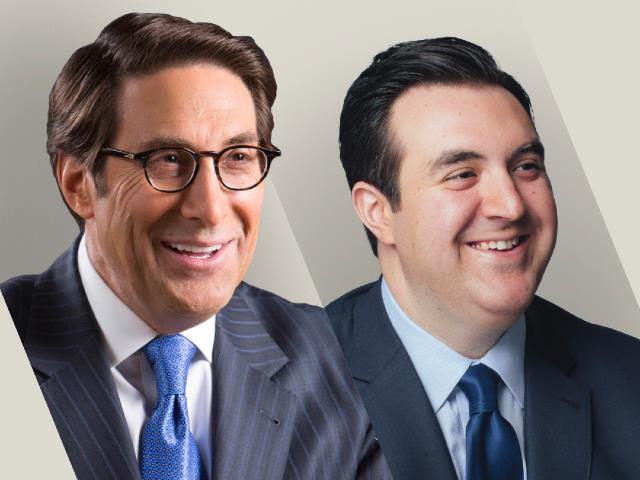
A collection of the ACLJ's best segments from the week that was.
Logan Sekulow: Welcome to Sekulow. It's Friday, August 21st. Will Haynes in studio, I'm in studio, and look, we've got a packed show because I want to flash back a little bit and show you some amazing work the ACLJ has been doing. We've talked about a lot of this throughout the week. There are some really interesting things happening. Of course, our focus has been on the state of California. You may have wondered why the ACLJ spends so much time talking about California and why we are always there. Number one, one of the top states for supporters of the ACLJ is the state of California. I know that can be shocking to a lot of you. You think maybe we've got a Southern stranglehold or a Midwest stranglehold, but no, when you look at the states that really support the work of the ACLJ, of course, it's across the board. So many different ones, and sure, those Southern states or those more red states, they certainly are supportive of the work we do. But we also know there's deep need for us in states like California and New York. We see that from just the numbers. We can see where people donate, we can see where people support, and of course, where people like you call in from or comment from. Let me know where you're watching from. That's always appreciated. We're going to break down over the next few segments a lot of what we've been covering in California with our FOIA cases.
Will Haynes: That's right. When a state is doing things that lessens the trust in the federal election system, even if you are from a red state or you are not from California specifically, you need to make sure that all of the states are doing the right thing to protect the free and fair elections of this country so that everyone has trust in the system. What we've been uncovering through our open records requests to California, the state equivalent of FOIA there, is really trying to get at the heart of whether the mechanisms within the state, both the Secretary of State as well as the California Department of Justice, are doing what they are supposed to be doing under federal law to ensure the freedom and the fairness of their elections and to ensure that only people who have the right to vote are allowed to vote. We're starting to see through these FOIAs that they aren't. They are not tracking certain things. They aren't reporting certain things, and it raises a lot of questions. Sometimes you have to first expose it to know where to go next. That's exactly what you're going to hear today on this broadcast, some of the latest updates in our fight to ensure the security of the elections in California, which affects every state.
Logan Sekulow: With that being said, we also want to make sure you're supporting the work of the ACLJ. Today is actually the last formal day of our Impact Match. Next week we're going to have a special last week big push. You're going to tune into some exciting new video packages and everything we've put together. But just for the traditional Impact Match, today is it. I want you to be a part of it today at ACLJ.org. At ACLJ.org, any donation that is made today is doubled by our ACLJ champions. There are also some members involved in that too. They get together and they make a pledge, and that number is usually, I'll be honest, extremely high. But we only can reach that number if I'm honest. I don't think we've ever reached the full amount where we've had to say we've got to go back for more because we are able to get the incredible champions to say, "Yes, we will pledge X amount." It usually ends up being somewhere up towards seven million dollars. Our monthly push for these kind of things are so when you donate, they're ready to unlock their pledge at any level. If we ever do reach that budget and that limit, I'll let you know. I'll be happily celebrating that the work of the ACLJ has gotten to that point. But you need to be a part of it today. I encourage you to go to ACLJ.org where all your donations are matched. Again, that's the legal side, that's the media side, that's the ACLJ, and that's the ECLJ, our European center. Of course, we are talking about all the legal work that we do at absolutely no cost. This show that we do is at no cost to you. There's no paywalls here. Then you even talk about our offices in Jerusalem, the ACLJ Jerusalem, or you talk about, again, our European Center for Law and Justice. The ACLJ team is all over this country. The work that we do overseas, whether that's some of the stuff you've heard recently about some of the work we're doing related to China, Pakistan, wherever it may be at the UN, our team is there, and we're only there because you support the work. So as we head to a break, it is Friday, the last day to talk about this for the week. Your donations will be doubled of any level. It's five dollars or 500 dollars. Do whatever you can, and we appreciate it. Go to ACLJ.org.
Logan Sekulow: All right, we're back. Phone lines are open at 1-800-684-3110. Jordan's joining us in studio now. Of course, we were talking about the ACLJ's work here, and I think this is always important to point out when we are directly involved. You've heard some of these big stories yesterday. We were talking about the bounty for our soldiers that's happening in Iran. You're hearing about all this situation where the ACLJ can get involved in a diplomatic way.
Jordan Sekulow: We can get involved internationally through the European Center for Law and Justice and the work we've done at the International Criminal Court. That usually comes after the fact when the war is over. This, though, we're directly involved and we are actually leading the charge here. This is a state FOIA request essentially. It's not called FOIA, but we know every state's got their own version. A lot of them are called state sunshine laws. They basically allow citizens to do it. It shouldn't have to take attorneys and legal groups to do it, but because these governments, like the federal government, even under this administration, as the political appointees will tell you, you're going to go up against those bureaucrats. You're going to have to ask hard and usually take them to court to get any answers. Here, the first response from the Secretary of State's office was, "We've got nothing. We don't track anything about removing people from the list that has to do with being non-citizens." This is bizarre because federal law requires you to have the reasons, and so there's no way of knowing then if their list has removed people who should not have been voting at all. Even in San Francisco that allows legal non-citizens, so people who are here legally but aren't citizens, to vote for the school board. They allow that, but who else is tracking? They're saying you can't even check a box. Then you go to the AG's office and they're saying, "We'll look through some cases and some actions for you, but as of right now, we've got no policy on this." In a state that's probably got the most illegal immigrants in it next to maybe Texas, which is, of course, cracked down a lot harder than the state of California, it's a big issue state. This should be something that's really top tier. Remember what happened in New Jersey that we just talked about, where they discovered they accused a glitch of happening within the software that allowed people to register when they just got their driver's license through motor voter laws. We see we're fighting in Maryland right now to get records related to this because Maryland, some cities like we're talking about in California, allow non-citizens to vote in municipal elections. So we're asking in Maryland, how do you keep those two rolls separate? Or if someone moves to another city and says, "I'm registered to vote," how do they not automatically get statewide? We're asking these questions. In California, here's what's so shocking to me. One, we didn't even have to sue yet because in California, the Secretary of State just came back and said the quiet part out loud by saying, "We don't track it." At least they're giving us the info. Therefore, we have nothing to give you. But here's what I want to point out. Remember, they said they don't contain voter status reason for cancellation due to non-citizenship. That's what the Secretary of State told us. But then they tried to kind of assuage any concerns that we may have that this could lead to illegal voting by putting this graphic up. California law unambiguously provides that a person shall not be registered unless they are a United States citizen. California Elections Code 2100, 2101. Voters register to vote through affidavits of registration when they must attest under penalty of perjury and by signature that they satisfy all eligibility requirements including citizenship. So they're saying, "Look, we don't track it, but don't worry, it's illegal." So you don't have to be concerned about people illegally registering to vote because it's a crime and they'll get in trouble. Then you fast forward to what we just got from the Department of Justice. This is the entire reason our attorneys had to go to both places. Because they say, "In response to part two," which part two was the question where we asked for all records containing or addressing policies for handling investigative referrals for illegal voting, their response was, "In response to part two of your records request, after a reasonable search including contacting knowledgeable individuals, DOJ has not identified any records," meaning any documents, anything written down, any procedures, "addressing policies that are specific to handling investigative referrals for illegal voting. This concludes DOJ's response to part two." So the Secretary of State is saying they don't track it, but don't worry, it's illegal. So if there's a law being broken, the DOJ will handle it. The DOJ says, "We don't have any policies related to investigating that."
Jordan Sekulow: They are also now saying it's not a priority. They go on and say sometime around August 27th, we're going to give you some information about how the DOJ said it found some records that could be responsive, but they need more time to review them for redactions and exemptions. Even that is questionable. They're not even sure if the records they found are actually responsive to our request about whether or not if anybody calls in and has a question. I imagine it's a worker. A lot of those are volunteers. It can be a small area in California or a big precinct, and you go and vote, and someone's there, then maybe their info doesn't show up and there are questions about citizenship because of the ID, and you don't have to have an ID there. So usually you do a provisional ballot, right? So you'd call in then to the head of whatever the election committee that makes this decision. I saw it all play out in real time and it made me go, "This is crazy to me."
Logan Sekulow: I think we'd be surprised how often this does happen. I was in line here in Tennessee voting at the primary election. This is someone who was motivated enough to go vote in a primary and then got there and was not registered. They had just moved to Tennessee, a younger person, and didn't understand the rules. Not everyone is as engaged and informed as people who listen to this show. You may not understand that there are people who are willing to get in a long line and try to vote, but then have no idea or understanding that they are not registered or have to register in the right place. I saw the same thing. I saw they had to get on a phone call with the head of the election committee. I saw it all play out in real time, and it made me think that this is what happens, not on a general election, but in a primary for governor here in Tennessee. Someone still showed up to vote because they wanted to, and I don't think they were trying to vote illegally. They just were completely uninformed.
Jordan Sekulow: They didn't know where to go or if they were registered at the right location. They were with somebody who maybe said, "Let's go vote." Early voting even confuses that more because when it's early voting, you can usually vote in any precinct in the state. So you could be someone who votes, let's say, in Memphis, but you're in Knoxville during early voting. You're able to go into Knoxville, which you would not be able to do on election day. You'd have to go to your precinct in Memphis, but you could go early voting and show up at one in Knoxville, and they've got to handle you on the record system. While again, I think early voting can be good and bad, I think there are rules around it that could make it better. The closer it is to the actual election day, the better, because we know you find out a lot about candidates right before elections. Now what they do, if you notice with the attack ads, is the attack ads start running right before early voting begins now. So you start getting all of that, which doesn't always give time for the person who was attacked to get their response up before people are already voting. That's not good for our system either.
Will Haynes: What comes next? Because this is ACLJ attorneys that are working very diligently on this trying to get these records. One, we have to see what the DOJ says later in this month in just about 10 days from now. We can get more records and we can analyze those. But there's a lot of different avenues. One, just the Secretary of State's office alone noting that they don't keep the reason for taking someone off their rolls could be a violation of federal law. That's something that we could send to the Federal Election Commission saying you need to look into this. Congressional oversight. We have a lot of allies in Congress that we could get this information to as they look at strengthening our elections. But I think it also goes to show there's a ballot measure on the ballot in California for voter ID. The very same Attorney General's office who right here is saying we have no policies for investigating illegal voting or people that are registered to vote illegally, he's the one who changed the language on the ballot provision to make it harder to pass by changing it from, "We are requiring ID to protect the elections," to, "We are barring people from voting unless they show ID." Even the negative inference there. So what we're looking at is moving forward with the different steps that can come. We are going to analyze what comes in later this month and be able to look forward at the next steps of how to keep going.
Logan Sekulow: I want in the next segment for you to join us as well as we're going to continue talking about the work of the ACLJ in a completely different manner, but again, it ties itself in. You're not going to want to miss this. You'll see how the ACLJ is getting involved in a lot of different legal pursuits and people who have been targeted for just being representation of President Trump, of the Trump administration, and of conservatives. We'll get back to that in the next segment, but we'll still take calls on this. Phone lines are open. I want to hear from you at 1-800-684-3110. 1-800-684-3110. All the lines are open. We've given you all the info. I see how many of you are watching. Some of you have got to have calls. You've got to have a comment. I know you do. 1-800-684-3110. Maybe you're one of those people who got in line and you were too busy at the Entertainment Tonight show. It's what happens. 1-800-684-3110. Be on the air today. Listen, it is the 18th of the month here. After this couple of weeks, you're not going to have to hear about me talking about a match or a drive for quite some time. So I want you to be a part of it today. Go to ACLJ.org.
Logan Sekulow: Welcome back to Sekulow. Phone lines are open at 1-800-684-3110. Of course, we just were talking about what was going on in California and our investigation into how they treat voter fraud, voter ID, and voter certification to make sure people actually are voting who should be voting. We're learning very quickly that they don't have a whole lot of standards and practices. At the same time, the ACLJ is dealing with another matter here that I think we want to get into. Again, this ties in somewhat to this issue of election integrity but also the importance of being able to have proper representation.
Jordan Sekulow: This is a thing that the ACLJ has fought back against in many different avenues for a long time, and it's lawfare that's used by the left to try to go after their political enemies using the legal system as a form of attack. I've seen people on Rumble and on YouTube as well comment that they've seen this case that we've taken on being talked about in other areas and that they were excited about it. We hadn't addressed it on air yet, but this is where the ACLJ is representing Professor John Eastman. He was an attorney that represented President Trump, much like yourself and your dad. The state of California decided to go after him because of his representation of President Trump. He was never sanctioned by a court. He was never found of doing misconduct as an attorney, but they went straight to disbarment. Now we are having to take this to the Supreme Court of the United States to fight for justice here. In the United States of America, we are protected, even as attorneys, to make novel legal arguments that may not have been made before in past history because they weren't necessary or our brains weren't having to deal with the problem that was at hand. Even if that is not going to be one that ultimately gets accepted generally by the courts, it doesn't mean that by putting it for to the courts, you are somehow violating your oath as an attorney. The only way that would be like a violation is you'd really have to figure out intent here, if you knew 100 percent that this was somehow illegal to even put this forward or you were totally wasting the court's time. Usually that wouldn't happen until a court had already said we would never consider this because of X, Y, and Z. You could usually appeal that court and then appeal to the next court and to the next court. If you're in state court, you could ultimately appeal that decision to the US Supreme Court, and then if you kept doing it, they might. But think about how many people, sometimes on their own or just small legal offices, file bad claims in local and state courts. While they may get sanctioned sometimes, they may get a little fine, what they don't have taken away is their bar license. Usually they just lose. Sometimes they lose and the court's kind of tough on them. The state bar may look at it after maybe five or six times and say they need to go back through and do a special legal training. But they're very cautious about just revoking licenses 100 percent with no due process and no way to move forward and get that license back because you put forward a novel legal theory in a very quick, heated time in the United States involving a presidential election where things have to move fast. Because of that, your entire practice of law needs to be deleted and you need to be removed. This is like you're canceled from being an attorney in the state of California because you took a position their courts didn't like. Their bar association didn't like it. Why we have to take this to the Supreme Court is that the way that the California Bar works is it goes through the state Supreme Court. Like most bars, the court of first look here is the Supreme Court of the United States for us to make this appeal. So it's a direct jump to the Supreme Court and we'll be filing very early.
Will Haynes: I wanted to bring up what you just said because the lawfare here isn't just against Professor Eastman. That's why sometimes we have to explain why we have to protect the attorneys here. It's because what their goal isn't just to get Professor Eastman disbarred. It's that conservatives won't have anyone to represent them. I saw Ted Cruz put out a graphic yesterday about how the political donations of the top 100 law firms in the country, not even one of them has more than 50 percent to a Republican. That's fine. That's freedom of speech, freedom of association. There's nothing inherently wrong with that. But if you make it toxic or you make it something to be ashamed of if you represent a conservative, then whenever the left wants to use lawfare against you, then you have no one to represent you. That's one of the other key elements here is trying to protect the right to an attorney for every American here, not just the President or future political politicians. It's when the left wants to use the courts as a weapon of political power, you have to have someone that can represent you, including ACLJ attorneys.
Jordan Sekulow: Yes, the ultimate goal is to scare people away from cases that may be controversial or may be new. But you know what? If you look back in history, the cases that were novel, the cases that were new, starting with the powers of the federal government and the judiciary in Marbury versus Madison. Going to the civil rights movement and the post-Civil War reconstruction. It was tough for those NAACP attorneys to go to court because of the death threats. But imagine if those courts and their bar associations just started disbarring them because they said, "You know what? Our laws say that you're not, you don't get to vote, you don't get to have this representation. So you're putting forward arguments that are in direct conflict with our state law. You've lost four or five of these cases. We're going to disbar you." Instead, what they would do then is they'd imprison sometimes the attorneys in contempt. That's even worse to some extent. But I don't remember them having their licenses necessarily revoked. Has it gotten even worse than what was happening during the civil rights movement for conservatives? I don't think we're there yet, but that's the idea. The idea is to scare you away, and it's why those big law firms donate to the Democrats. Republicans don't believe this. You could be a far-left attorney. We don't believe that you should be barred from being an attorney because you come up with novel legal theories, especially if you're coming out of the world of legal academia, which is what they're working on constantly.
Logan Sekulow: Your job is to defend a client. It's not necessarily to even agree with your client. You're coming up with any possible way to defend them, and usually you put up three or four different ways. If the court doesn't like this, also the court needs to look at this. If it doesn't like this, you should look at this. But he is in a situation where he was dealing with a hostile Bar Association and then a hostile state court system. It will be interesting to see here in the Supreme Court. We're going to be filing in less than two weeks.
Jordan Sekulow: We've got less than two weeks here, so we need people to go to ACLJ.org and get supportive because that will mean a reply brief is coming. There is a lot of work on this before you actually get to the decision about whether the court is going to take the case.
Logan Sekulow: Look, the ACLJ is involved in all these issues today. We've been really highlighting a lot of the work that we're doing directly and I wanted to make sure you know that because we are, of course, well over halfway through our Impact Match. I need you as we head to a break to donate today if you can at ACLJ.org. Look, we've got a second half hour coming up but all donations are matched. Some of you lose us here as some of your local radio stations only carry a half hour. Well, we have a full hour show each and every day. Be a part of it. Streaming live 12:00 to 1:00 PM Eastern Time. That is Monday through Friday on YouTube, Rumble, Facebook, of course on ACLJ.org. That is probably the easiest way to just find all the places it's active. We'll get your podcast later on archived. But again, second half hour coming up. Rick Grenell's joining us, and I want to hear from you at 1-800-684-3110. But as we head to a very, very short break, less than a minute. If you're going to join us online, hop over right now. Less than a minute. I want you to go to ACLJ.org, make your donation today, and have it doubled. We've got to tackle these new challenges and we can't do it without you. We'll be right back.
Related Episodes
About SEKULOW
The American Center for Law and Justice (ACLJ) focuses on constitutional law and is based in Washington, D.C. The ACLJ is specifically dedicated to the ideal that religious freedom and freedom of speech are inalienable, God-given rights. In addition to providing its legal services at no cost to our clients, the ACLJ focuses on the issues that matter most to you — national security, protecting America's families, and protecting human life.
About Jay Sekulow
Dr. Jay Alan Sekulow is Chief Counsel for the American Center for Law and Justice (ACLJ), a legal and educational not-for-profit organization that focuses on constitutional law, the defense of freedoms of speech and religion, and international human rights. He is also Chief Counsel of the European Center for Law and Justice (ECLJ) based in Strasbourg, France, and the Slavic Center for Law and Justice (SCLJ) in Moscow, Russia. The ACLJ also has an affiliate office in Jerusalem, Israel.An accomplished and respected judicial advocate, Sekulow has presented oral argument before the U.S. Supreme Court in twelve cases in defense of constitutional freedoms. Several landmark cases argued by Sekulow before the U.S. Supreme Court have become part of the legal landscape in the area of religious liberty litigation; these cases include Mergens, Lamb's Chapel, McConnell v. FEC, Operation Rescue v. National Organization for Women, and most recently Pleasant Grove City v. Summum.
In 2009, Townhall Magazine named Sekulow to its "Townhall of Fame" and recognized him as "one of the top lawyers for religious freedom in the United States." In 2007, the Chicago Tribune concluded that the ACLJ has "led the way" in Christian legal advocacy. In 2005, TIME Magazine named Sekulow as one of the "25 Most Influential Evangelicals" in America and called the ACLJ "a powerful counterweight" to the ACLU. Business Week said the ACLJ is "the leading advocacy group for religious freedom." Sekulow's work on the issue of judicial nominees, including possible vacancies at the Supreme Court, has received extensive news coverage, including a front-page story in The Wall Street Journal. In addition, The National Law Journal has twice named Sekulow one of the "100 Most Influential Lawyers" in the United States (1994, 1997). He is also among a distinguished group of attorneys known as "The Public Sector 45" named by The American Lawyer (January/February 1997). The magazine said the designation represents "45 young lawyers outside the private sector whose vision and commitment are changing lives."
Sekulow brings insight and education to listeners daily with his national call-in radio program, Jay Sekulow Live!, which is broadcast throughout the country on nearly 850 radio stations. Sekulow also hosts a weekly television program, ACLJ This Week, which tackles the tough issues of the day. He is also a popular guest on nationally televised news programs on ABC, CBS, NBC, CNN, FOX News, MSNBC, CNBC, and PBS.
Contact SEKULOW with Jay Sekulow
Mailing Address
American Center for Law and Justice
PO Box 90555
Washington, DC 20090-0555c
Legal Helpline
Phone: 757-226-2489
Fax: 757-226-2836
Member Services757-802-9160
Radio Call-in Number1-800-684-3110
(from 12-12:30 PM EST/EDT.)
Petition Call-in Number1-877-989-2255